Blog
Image


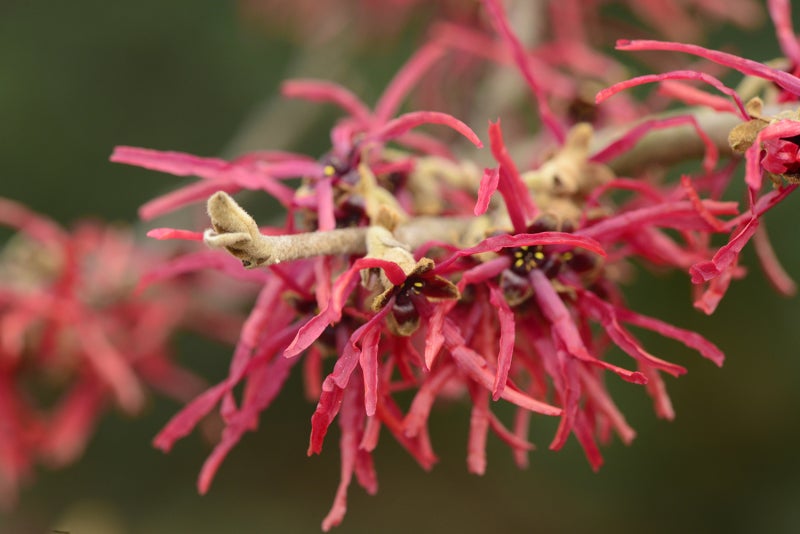
Witchhazels (Hamamelis) are native to eastern North America, China, and Japan. Gardeners and plant lovers treasure them for their mid‑to-late-winter flowers, which unfurl in shades ranging from pale yellow to fiery orange, deep red, and even purple. Their distinctive ribbon‑like petals and sweetly spiced fragrance make them one of the most captivating winter‑blooming shrubs.
The genus name Hamamelis comes from the Greek hama (“at the same time”) and melon (“apple” or “fruit”), referring to the plant’s unusual habit of producing flowers and fruit simultaneously. And if the common name sounds familiar, it’s because witchhazel extract, commonly found in skincare products, is derived from the bark and leaves of the plant.
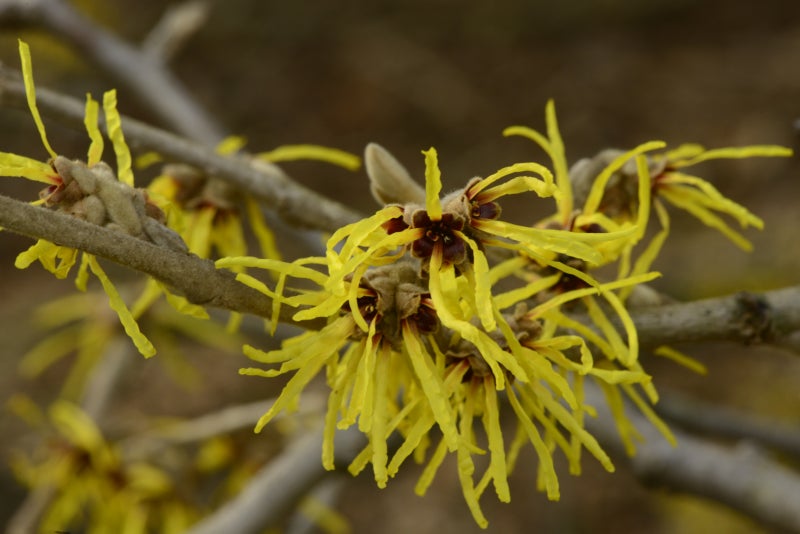
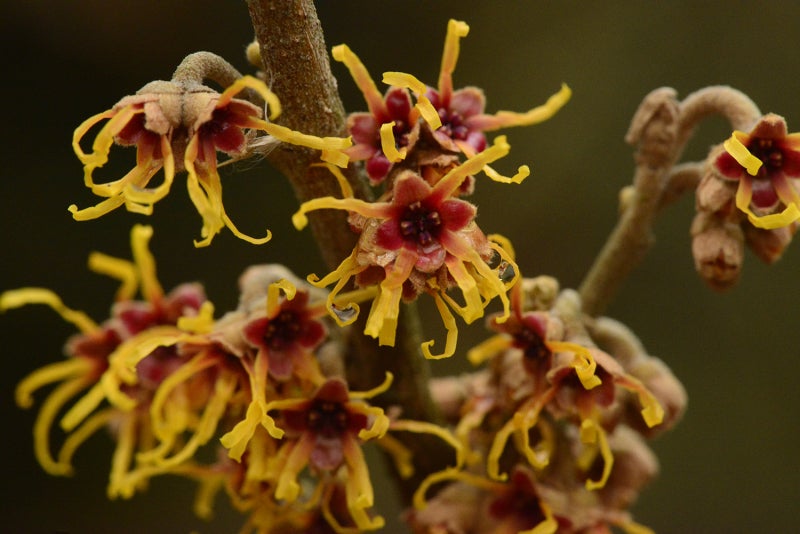
Witchhazels are currently in bloom across the Morris, and we anticipate peak color by mid‑March. Plan a visit over the next several weeks to enjoy these remarkable winter flowers at their best. For a deeper dive into the collection, join one of our guided Witchhazel Tours, where an expert will introduce you to the many species and hybrids growing throughout our gardens.
Can’t make the tours? Use our Witchhazel Map on your next visit to create your own self-guided tour of our collection.
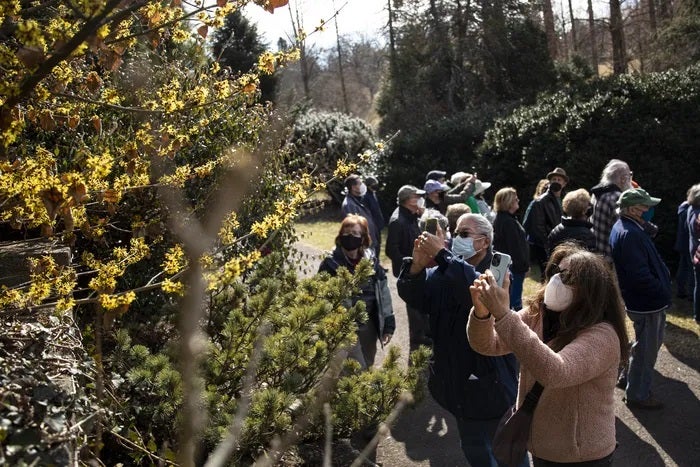
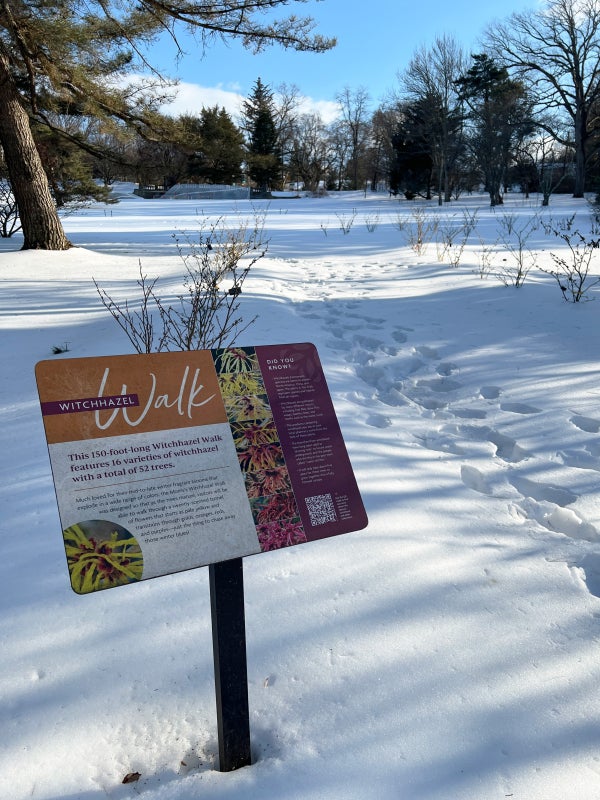
Our newest feature, the Witchhazel Walk in English Park, is a stunning 150‑foot path showcasing 16 varieties and 52 individual witchhazel trees. This curated collection represents species and hybrids from around the world. Designed with long‑term beauty in mind, the Witchhazel Walk will eventually form a fragrant, flower‑filled tunnel. As the trees mature over the next five years, visitors will be able to stroll beneath a canopy that transitions in ombre fashion—from soft yellows to golds, oranges, reds, and purples. It will be a vibrant antidote to winter’s gray days and a highlight of the season!
→ A unique germination process: Unlike most seeds, which have a single dormancy period, witchhazel seeds require two alternating cold‑warm‑cold cycles to germinate. This double dormancy can take up to two years in nature, making seed‑grown plants a challenge. Many of the Morris Arboretum & Gardens' straight-species witchhazels were wild‑collected and grown from seed, adding to the scientific and horticultural value of the collection.
→ Explosive seeds: Witchhazels perform a process called ballistic dehiscence, where the seeds ripen through summer and the seed capsules explode in fall, dispersing the seeds as far as 30 to 40 feet away from the parent plant.
→ Pollinator magnets: Witchhazels attract a surprising variety of insects, including fruit flies, blow flies, wasps, beetles, bees, and even winter‑active moths like the owlet moth.