Events
Image


Philadelphia is not only the birthplace of America; it is the birthplace of American botany. Widely celebrated as “America’s Garden Capital,” the city has also played a pivotal role in shaping the nation’s understanding of plant sciences. Join us for a lively virtual discussion exploring Philadelphia’s rich botanical legacy through compelling stories of the past and examples of cutting-edge research tools Morris Arboretum & Gardens scientists as well as other members of the Penn research community are using to solve enduring botanical mysteries. Highlights include new research initiatives at Morris, an exploration of the genetics of Penn’s historic Penn Treaty Elm, and collaborative work in plant genetics with the Penn Museum. Free with registration.
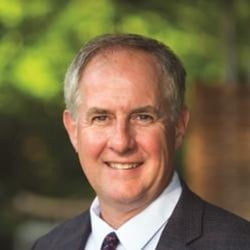
Prior to joining the Morris, William Cullina was the president and CEO of Coastal Maine Botanical Gardens for 8 years. He holds degrees in plant science and psychology and has been working in public horticulture for 30 years. He has extensive experience in commercial nursery production as well as a background in horticultural and forestry research. Cullina is a well-known author and a recognized authority on North American native plants.
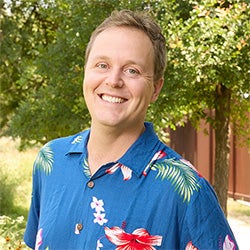
Dr. Morgan Gostel is the John J. Willaman Director of Plant Science at the Morris Arboretum & Gardens of the University of Pennsylvania. His research in plant systematics emphasizes diversity and evolution of what he refers to as his botanical A, B, Cs, namely three families of flowering plants including Araliaceae (ginseng and ivy), Burseraceae (frankincense and myrrh), and Compositae (daisies and sunflowers). His work has especially been focused in tropical Africa and Madagascar, but the plants in these families are distributed worldwide. Dr. Gostel is also a Research Associate in the Department of Botany at the Smithsonian Institution’s National Museum of Natural History and the Botanical Research Institute of Texas at the Fort Worth Botanic Garden. Since 2015, he has led the Global Genome Initiative for Gardens (GGI-Gardens), an international partnership of botanic gardens dedicated to supporting the collection of genome-quality tissues from living collections to support genomics research.
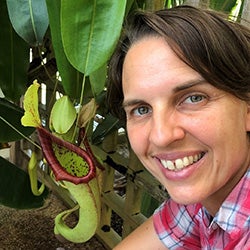
Cynthia Skema is a Botanical Scientist at Morris Arboretum & Gardens of the University of Pennsylvania. She earned her Ph.D. at Cornell University, an M.Sc. at the Royal Botanic Garden Edinburgh, and a B.A. at Bryn Mawr College. Dr. Skema enjoys studying plants in the field, herbarium, and lab, and she is particularly interested in how DNA evidence can be used to solve puzzles about the evolution, relationships, and demographic history of plants.
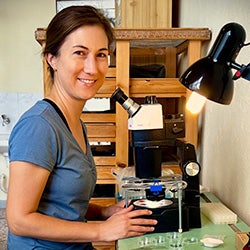
Chantel White is the Teaching Specialist for Archaeobotany in the Center for the Analysis of Archaeological Materials (CAAM) at the Penn Museum. She is also a Senior Lecturer in the Department of Anthropology in the School of Arts and Sciences. Her research focuses on the study of plant remains from the Near East, Mediterranean, and historical North America across a diverse set of archaeological sites ranging from the Upper Paleolithic (40,000 years ago) to the recent past (19th century). The shared goal of these studies is the reconstruction of everyday life, particularly the identification of activities related to the storage, preparation, and consumption of foods.
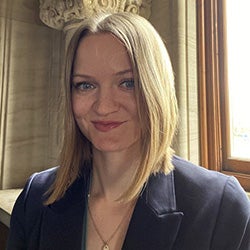
Hannah Anderson is an Assistant Professor of History at the University of Arkansas at Little Rock. Previously, she was the University College Fellow of Early American History at the University of Toronto. She holds a Ph.D. from the University of Pennsylvania. Her book manuscript, Lived Botany: Settlers and Natural History in the Early British Atlantic, examines how settlers exchanged botanical knowledge with Indigenous and African people and argues that these interactions shaped the development of the science of natural history and the fate of England’s Atlantic empire. Dr. Anderson’s work has been supported by many institutions. Most recently, she was a Dibner Long-Term Research Fellow in the History of Science and Technology at the Huntington Library. In the past, she has also received support from the McNeil Center for Early American Studies, the American Philosophical Society, the Consortium for the History of Science, Technology, and Medicine, the John Carter Brown Library, the American Antiquarian Society, the Library Company of Philadelphia, and the New England Regional Fellowship Consortium.

Since joining the Morris’s Board of Advisors in 2020, Lexa Edsall has been an active member of the Morris’s Master Planning Working Group. Edsall has a deep career in politics and law, serving in the offices of the deputy attorney general and the solicitor general at the US Department of Justice; as an associate at Covington & Burling; as a judicial clerk to Supreme Court Justice Ruth Bader Ginsburg; and as senior adviser to the general counsel at the US Department of the Treasury. Edsall earned her BA and law degree from Harvard University and has a master of city planning degree from the University of Pennsylvania’s Stuart Weitzman School of Design.