Blog
Image


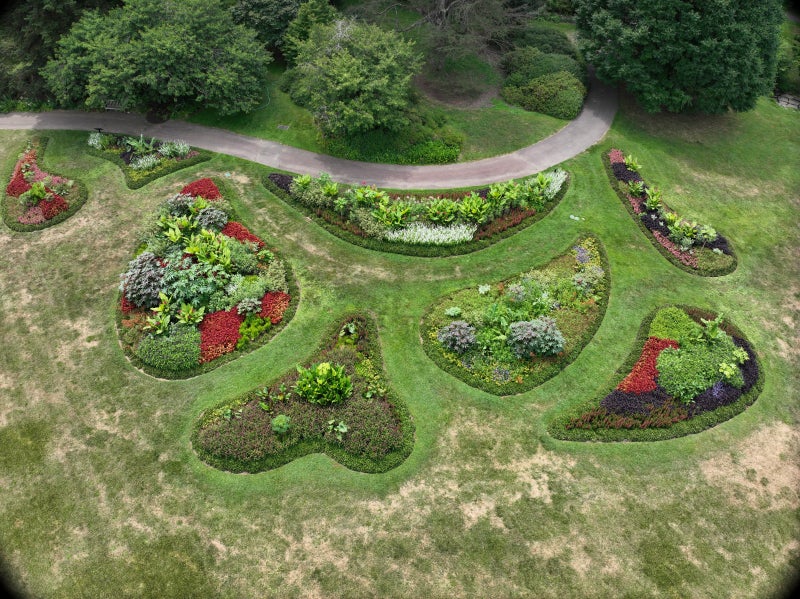

When I joined Morris as a horticulturist, the space that is now Exuberant Blooms was nothing but turfgrass. Simple, easy, and boring. Then, seemingly overnight, we were removing the turf, dumping cartloads of compost, adding rows of drip irrigation, and planting thousands of annual and tropical plants into paisley-shaped beds. The nearby statues of John and Lydia Morris watched over us as we installed beds inspired by the Victorian bedding style that was popular during their time on the Morris estate.
The first year of the garden in 2023 was bereft of beginner’s luck as we battled May frosts, roving groundhogs, and an early summer drought. Despite the setbacks, the plants persevered and by late July the memory of struggling plants was replaced by the sight of cannas and Mexican sunflowers towering overhead. Salvia cultivars like ‘Blue Chill’ and ‘Wendy’s Wish’ offered consistent flowering and vigorous growth.
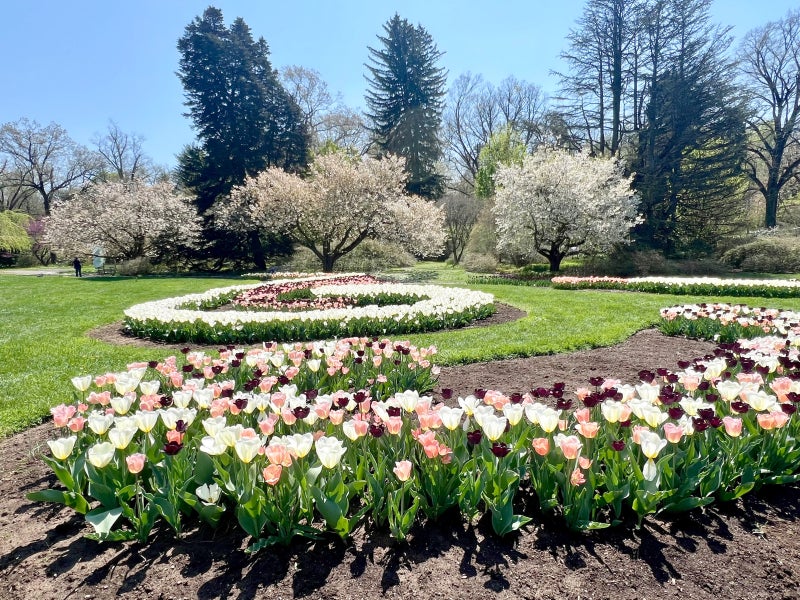
In the fall we removed the summer display and buried a moody palette of tulips in swoops and swirls for the coming spring. Some of the bulbs didn’t stay buried for long as heavy early winter rains washed soil and bulbs out of beds as far away as the stream feeding into the Morris Pond. The repeated sight of dislodged tulips prompted us to later change the bed shapes to better channel the water.
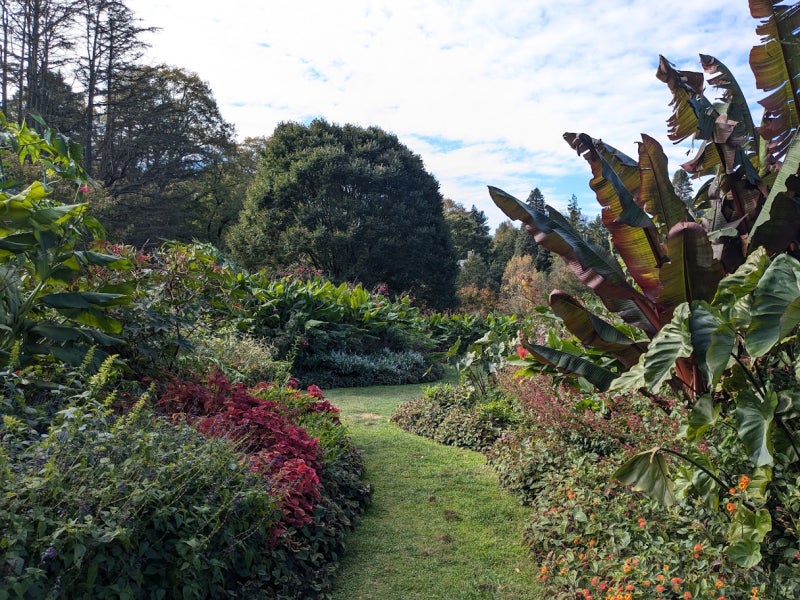
The second summer’s bold and tropical theme was punctuated by plants like a species of banana, Musa balbisiana var. balbisiana, which grew from knee-high to around 15 feet tall in a single year. We also grew a handful of papaya (Carica papaya) that started as seeds from a fruit from the grocery store—you can have your papaya and eat it, too! For the most recent summer of Exuberant Blooms, we focused on plants with a wide variety of flower shapes and colors. It was fun to combine common flowers like marigolds and zinnias with oddities like snow-on-the-mountain (Euphorbia marginata) and lulo (Solanum quitoense).
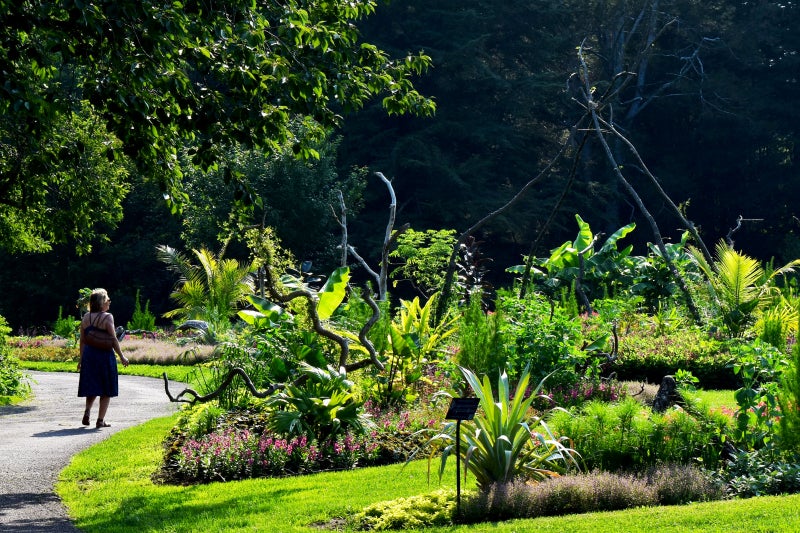
This summer, we repurposed deadwood from the property to create a new layer of intrigue among the plants. Zelkova, crabapple, sycamore, and elm branches add verticality and structure to the beds, while also serving as naturalistic trellises for flowering vines. I'm especially fond of the arches connecting the beds, inviting you to take a step off the paved path and explore the over 40 different plants that make up this year's display. As you walk through, look for the Sunburst passionflower vine (Passiflora 'Sunburst), which has leaves covered in yellow-green spots that mimic butterfly eggs. These spots are an evolutionary response to caterpillar herbivory — butterflies are less likely to lay their eggs on leaves where eggs are already present. Check it out along with all the other vibrant plants in Exuberant Blooms on your next visit, and see more photos of previous designs below.


