
Herbarium and Networks

Morris Herbarium
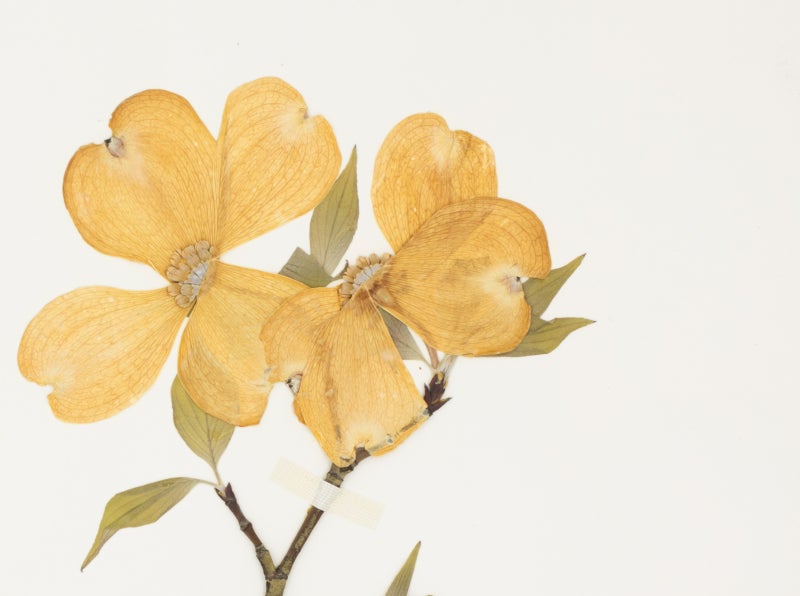
The Morris is home to the Herbarium of the Morris Arboretum & Gardens of the University of Pennsylvania. What's a herbarium? An archive of dried, pressed, dead plants. That might not sound like much but it is, in fact, priceless! Each specimen in a herbarium tells us about a specific plant collected in a particular place and time, complete with a physical specimen that allows for even more in-depth studies (morphological, anatomical, molecular... the list goes on!). Herbaria are the closest thing we have to a time machine for plant research and as such contribute exponentially to our understanding of plants. MOAR, our herbarium here at Morris, holds over 27,000 specimens and focuses on the flora of Pennsylvania and collections of wild material relevant to temperate species of horticultural interest or our living collection at Morris.
Mid-Atlantic Herbaria Consortium
The Morris Plant Science Department proudly coordinates the Mid-Atlantic Herbaria Consortium (MAHC), a consortium of 30+ herbaria from the Mid-Atlantic region (New York, New Jersey, Pennsylvania, Maryland, Delaware, and the District of Columbia). MAHC grew out of the Mid-Atlantic Megalopolis Project (2016 – 2021), a highly successful herbarium specimen digitization project lead by Morris Arboretum & Gardens and funded by the National Science Foundation of the US. The aim of MAHC is to get as many of our herbarium specimens from the region as possible digitized, with high-resolution images, transcribed field data, and georeferenced points. MAHC works together to create a portal of virtual herbaria with these digitized records to complement our physical herbaria, providing free online access to nearly 3 million specimens for researchers and the public alike. We welcome any Mid-Atlantic herbaria to get in touch (midatlanticherbaria@gmail.com or botany@morrisarboretum.org), if they are interested in joining the consortium.
Selected Plant Science Publications
The Plants of Pennsylvania: An Illustrated Manual
Pennsylvania, a state of diverse geography and geology, is rich in flora. The second edition of The Plants of Pennsylvania identifies the nearly 3,400 species of trees, wildflowers, ferns, grasses, sedges, aquatic plants, and weeds native to or naturalized in the Commonwealth. Developed in conjunction with the Pennsylvania Flora Project, and compiled by botanists at the Morris Arboretum & Gardens, the official arboretum of the Commonwealth of Pennsylvania, the second edition of The Plants of Pennsylvania is the authoritative guide to Pennsylvania's plant life. It will be indispensable to taxonomists, conservationists, ecologists, foresters, land planners, teachers, agricultural county agents, students, and amateur naturalists.