
Plant Science Lab

About the Plant Science Lab
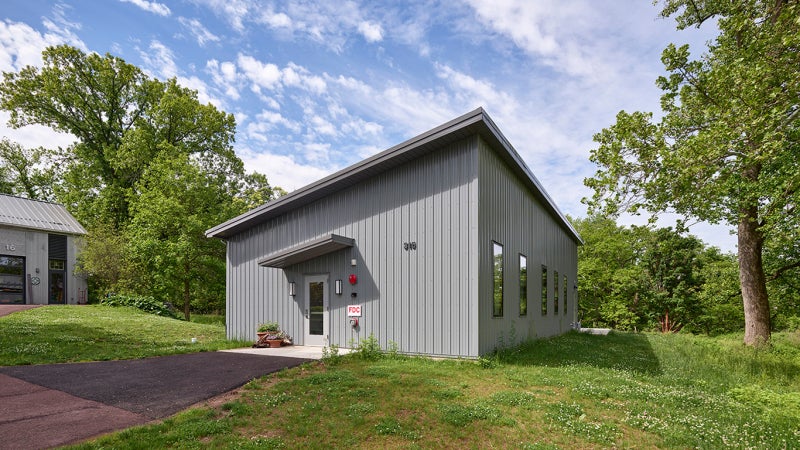
Featuring 1,500 square feet dedicated to wet lab space for our research team, this facility, which opened in 2025, supports ongoing active research projects in plant biodiversity, conservation, ecology, and evolution.
Our laboratory is fully equipped to support modern plant molecular and morphological research. For inquiries about equipment in our lab, please e-mail Lab Manager Dr. Lulu Korsak.
Active Research Projects
Subtribal classification of Ironweeds in the Eastern Hemisphere
Vernonieae is one of the most species-rich tribes in the sunflower family and notable for its challenging taxonomic history. A key challenge for taxonomists who work with this group has been characterized by what is referred to as “The Vernonia Problem,” which refers to a large and poorly defined core genus. Throughout much of its taxonomic history, Vernonia was considered among the largest plant genera on Earth; however, it was significantly reduced in 1999 to comprise only 20 species from the Americas. Despite significant taxonomic revision for this tribe in North and South America, more than 300 species from the eastern hemisphere (largely Africa and Madagascar) remain in the genus Vernonia that await recircumscription and placement into an alternative, segregate genus. Vernonieae is currently represented by 12 subtribes and 66 genera across its range in the Eastern Hemisphere. A critical priority for advancing systematic knowledge of this group is a concerted integrative taxonomic effort that combines a well-resolved phylogeny and detailed comparative morphological analyses. This project highlights integrative taxonomic tools to develop a infratribal phylogenetic framework that will guide subtribal classification and taxonomic revision of this diverse group of plants in the Eastern Hemisphere.
Ripariosida hermaphrodita
Ripariosida hermaphrodita, Virginia mallow, is a plant of paradoxes. It is a species with weedy tendencies, but is listed as threatened in the majority of states in which it occurs. It's an herbaceous perennial that puts on so much biomass in a single season that it is used as a combustible biofuel in parts of Europe. It seems to have disappeared mostly from areas that are actively preserved. Furthermore, Ripariosida is a fantastic biogeographic disjunct with its nearest relatives occurring on the other side of the world. Our studies of this interesting species include investigating its wild distribution (past and current), population genomics, morphology, floral development and evolution, and phylogenetic relationships to nearest relatives (members of the Plagianthus Alliance in the Malvaceae). We will use all these data to better inform conservation of this globally vulnerable species through partnerships with state and provincial agencies.
Rare Pycnanthemum of Pennsylvania
With a recent grant from the Wild Resource Conservation Program of the Department of Conservation and Natural Resources of Pennsylvania, we are conducting a study of Pycnanthemum, the mountain mints. Mountain mints are taxonomically problematic due to hybridization and polyploidy, and the resulting gradation of morphological characters between species can hamper confident identification. Thus, clear extinction risk assessments and conservation plans for Pycnantheum species can be lacking. Centered on three rare species in Pennsylvania—Pycnanthemum clinopodiodes, P. pilosum, and P. torreyi—our project will evaluate extant Pennsylvania populations through a resurvey of known localities and conduct a phylogenomic analysis of relevant herbarium material and wild collections. The focus on Pennsylvania material in this project will enable the proper listing and conservation planning needed for these rare Pennsylvania Pycnanthemum.
Biodiversity Biobanking
In addition to our new Plant Science Lab, Morris Arboretum & Gardens is pleased to announce the establishment of a new biodiversity biobank dedicated to the preservation of plant genetic and genomic resources. This facility, located within our laboratory, will house genetic resources resulting from staff and student research projects, with a special emphasis on the Flora of Pennsylvania. As director of the Global Genome Initiative for Gardens (GGI-Gardens), Dr. Morgan Gostel leads the biobank, which will facilitate biodiversity genomics research and help preserve the genomic heritage of the plants of Pennsylvania.
Photo Credit: U.S. Botanic Garden